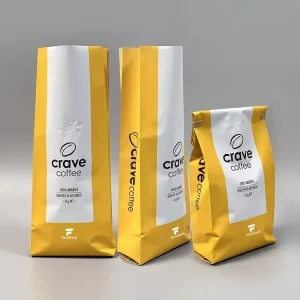

Side gusset coffee pouches — Built for Bulk Coffee Handling
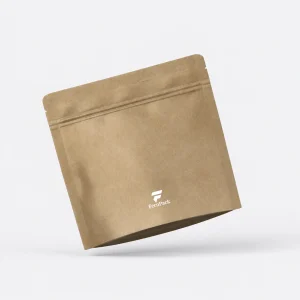
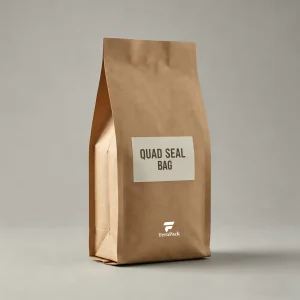
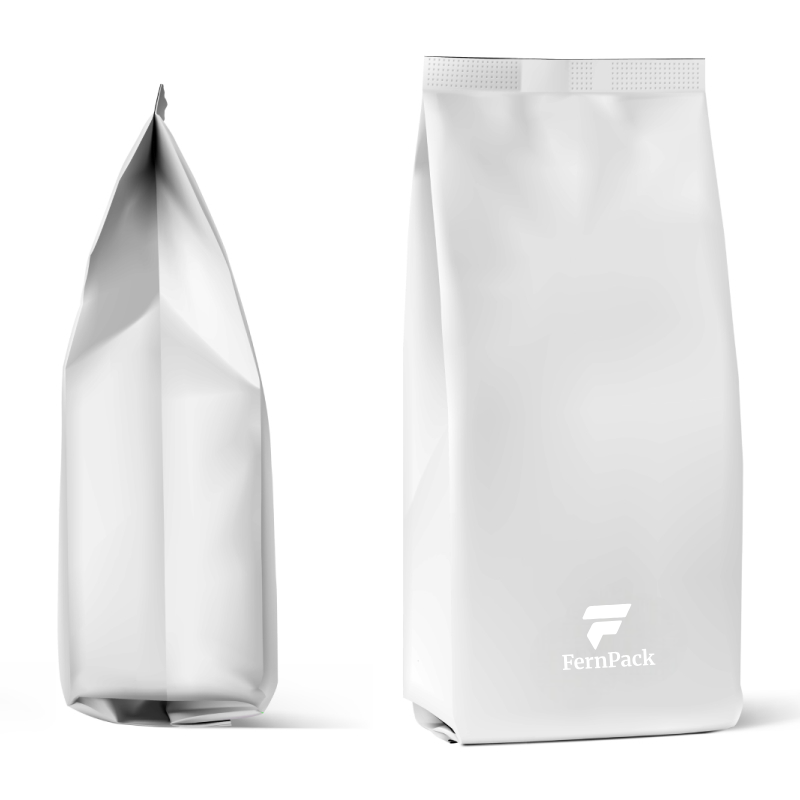
Side gusset coffee pouches are designed for coffee roasters and brands handling larger pack sizes, where filling capacity, storage efficiency, and transport need to be considered together. The expandable side gussets allow the pouch to accommodate larger volumes while maintaining a relatively compact rectangular profile for handling and storage.
This construction is commonly used for 500g, 1kg, 2kg, 5kg and larger coffee packs, depending on the filling density, material structure, and required bag dimensions. It is particularly relevant to wholesale coffee, contract roasting, foodservice supply, and other applications where larger quantities of roasted coffee need to move efficiently through the supply chain.
The side gussets allow the bag to expand as it is filled and provide a more structured shape for carton packing, palletizing, and warehouse handling. Compared with smaller retail pouches, the format is better suited to businesses where storage density and transport efficiency are important parts of the packaging decision.
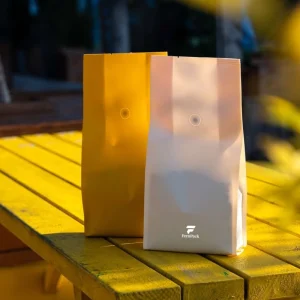
FernPack offers both stock and custom side gusset coffee pouches for larger coffee formats. Stock bags are available in selected sizes and material structures for ready-to-use applications, while custom production supports dedicated dimensions, materials, printing, and functional features. Depending on the application, options include high-barrier, kraft-based, recyclable, or compostable structures, with zippers, tin ties, degassing valves, and tear notches available where required.
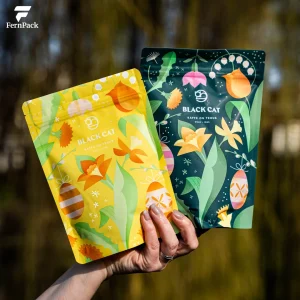
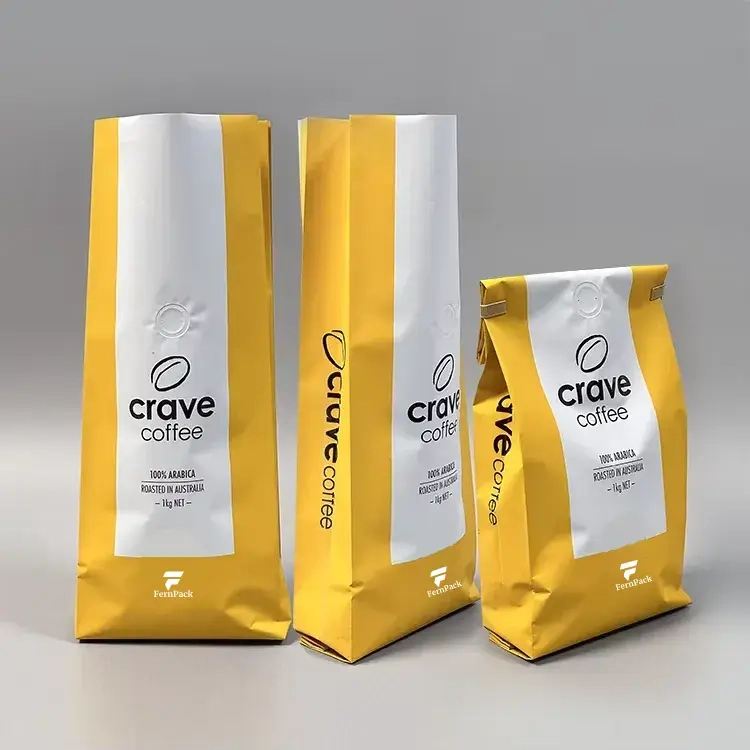
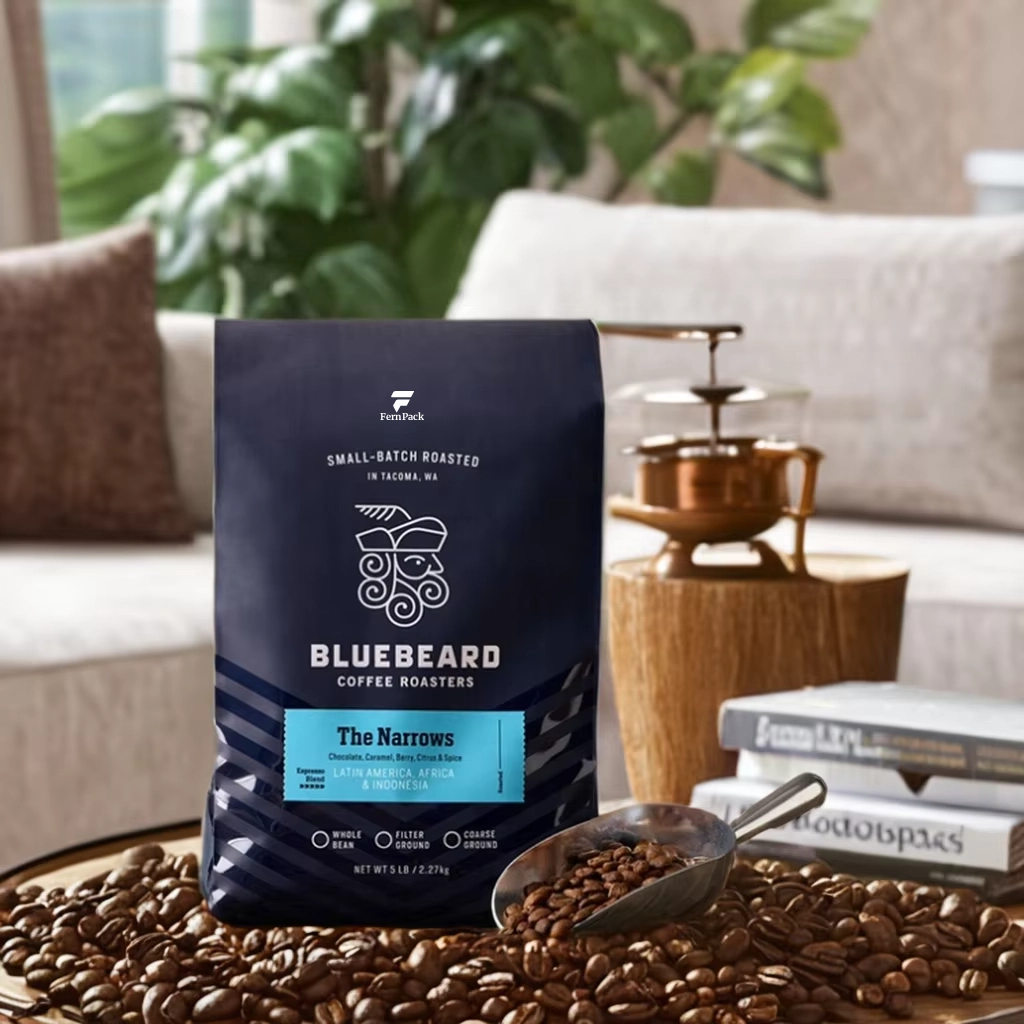
For brands that require printed packaging, the large front, back, and gusset panels provide useful areas for branding, product information, and handling marks. Stock and custom formats can be considered depending on the required size, material, and branding method.
The side gusset construction is particularly suitable when larger pack sizes, efficient handling, and wholesale or foodservice distribution are more important than the compact shelf footprint of smaller retail coffee pouches. For standard retail sizes where shelf presentation is the primary consideration, flat bottom, K-Seal, or other stand-up constructions may be more appropriate depending on the packaging requirements.
Frequently asked questions
1. Are side gusset coffee pouches better than stand-up pouches for large volumes?
Side gusset pouches are commonly selected for larger coffee formats because the expandable side panels provide greater internal volume and a more rectangular profile when filled. This can make them easier to organize in cartons, on pallets, and in warehouse storage. The appropriate format still depends on pack size, filling method, and distribution requirements.
2. Can I add both a valve and a tin tie to a side gusset coffee pouch?
Yes. A side gusset coffee bag can be configured with both a one-way degassing valve and a tin-tie closure. The valve helps release CO₂ from freshly roasted coffee, while the tin tie provides manual resealing after opening. Placement and configuration can be adjusted according to the bag dimensions and filling process.
3. Are side gusset coffee pouches suitable for 1kg and larger coffee packs?
Yes. The side gusset format is commonly used for 1kg, 2kg, 5kg, and larger coffee packs, depending on the bag dimensions and filling density. The expandable side panels provide additional volume while maintaining a relatively compact profile for handling and storage.
4. Can side gusset coffee pouches be used on automated filling lines?
Yes. Side gusset pouches can be produced for both manual and automated filling. Bag dimensions, seal configuration, material stiffness, and other specifications can be adjusted according to the filling equipment and packing process.
5. What materials are available for side gusset coffee pouches?
We can provide different material structures according to the required shelf life, coffee format, and distribution conditions, including high-barrier laminates, kraft-based structures, recyclable mono-material options, and other custom constructions. The final structure is selected according to the required barrier performance and filling process.