Choosing a coffee bag size starts with knowing how much coffee you need to pack, but the net weight alone doesn’t determine the right dimensions. A 250g coffee bag, for example, can have different widths, heights, and gusset sizes depending on the bag style and intended package shape.
For coffee roasters and brands, the right dimensions need to accommodate the coffee, work with the filling process, and provide the proportions you want for the finished package. A bag that looks suitable based on its measurements may not necessarily be the best fit once filled.
This guide provides reference coffee bag sizes from 100g to 1kg across four common packaging formats: flat bottom bags, stand-up pouches, side gusset bags, and quad seal bags. It also explains how to compare dimensions and confirm a suitable size before production.
Coffee bag sizes: Reference dimensions by weight and bag style
Coffee bag dimensions vary depending on the bag format, coffee weight, and proportions of the finished package. The following dimensions are based on FernPack’s reference coffee bag sizes and can serve as a starting point when selecting packaging with features such as a resealable zipper or one-way degassing valve.
These are reference dimensions rather than guaranteed filling capacities. The actual fit depends on the coffee and bag construction.
Flat bottom coffee bag sizes
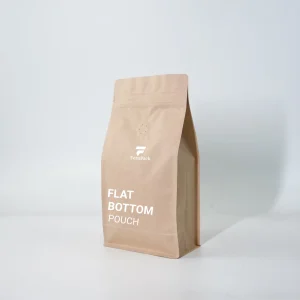
For flat bottom coffee bags, common reference dimensions include 90 × 185 + 60 mm for 100g and 130 × 200 + 70 mm for 250g. For larger retail packs, 130 × 240 + 70 mm is an option for 12oz (approximately 340g), while 135 × 260 + 75 mm and 150 × 325 + 95 mm are reference sizes for 500g and 1kg, respectively.
Flat bottom bag dimensions are expressed as width × height + side gusset width. For example, a 130 × 200 + 70 mm bag has a 130 mm front width, a 200 mm height, and a 70 mm side gusset.
Stand-up pouch sizes
For stand-up pouches, FernPack’s reference dimensions include 130 × 210 + 80 mm for 100g, 150 × 230 + 100 mm for 250g, 180 × 290 + 100 mm for 500g, and 230 × 340 + 100 mm for 1kg.
Stand-up pouches are available in different proportions and zipper styles, so these dimensions are not the only options for each coffee weight. A wider, shorter pouch may suit a different packaging design, while the zipper structure can also affect the overall specifications.
Stand-up pouch dimensions are expressed as width × height + bottom gusset width. A 150 × 230 + 100 mm pouch, for example, is 150 mm wide and 230 mm high, with a 100 mm bottom gusset.
Side gusset coffee bag sizes
Side gusset bags are another option for coffee packaging, particularly for brands that prefer a tall, narrow package. FernPack’s reference dimensions include 90 × 270 + 50 mm for 250g, 100 × 340 + 60 mm for 500g, and 135 × 410 + 70 mm for 1kg.
These dimensions are expressed as width × height + side gusset width. Unlike flat bottom bags, traditional side gusset bags have a folded bottom rather than a separate flat base. Their tall profile provides a different packaging appearance, although the finished shape depends on how the bag is filled.
Quad seal coffee bag sizes
Quad seal coffee bags can generally use similar reference dimensions to flat bottom bags. For example, 130 × 200 + 70 mm for 250g, 135 × 260 + 75 mm for 500g, and 150 × 325 + 95 mm for 1kg can serve as starting points when considering quad seal packaging.
Although the two formats can share similar dimensions, their bottom construction and sealing structures differ. The final specifications should therefore be confirmed based on the intended coffee weight and finished package shape.
How to choose a reference size
If you don’t have a particular bag shape in mind, starting with one of these reference dimensions is usually the simplest approach. For example, a roaster looking for a 250g flat bottom coffee bag can begin by testing the 130 × 200 + 70 mm size.
If your packaging design calls for a different shape, the bag’s width, height, and gusset can be adjusted to achieve the proportions you want, provided the revised dimensions remain suitable for your coffee and filling process.
Why the same coffee weight can require different bag sizes
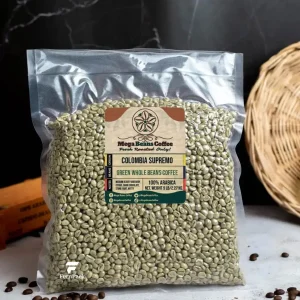
Coffee is sold by weight, but the space it occupies depends on its bulk density. Two coffees weighing 250g may fill the same bag to different levels, even when both are whole beans. Coffee with a lower bulk density generally takes up more space than denser coffee of the same weight.
Roasting is one factor behind these differences. As coffee beans roast, they lose moisture and expand, which changes their density. Darker-roasted beans generally occupy more space than lighter-roasted beans of the same weight, although bean size, shape, and roast development also influence the result. Roast level alone is therefore not a reliable way to determine bag dimensions.
Ground coffee can also behave differently from whole beans. Its smaller particles settle differently during filling, and the space it occupies depends partly on grind size and how the coffee is packed. A bag suitable for 250g of whole beans may also accommodate 250g of ground coffee, but the fill level may not be the same.
For roasters selling multiple coffees, these differences are worth considering when choosing a common bag size. Using the same dimensions across several products can simplify packaging purchases and inventory management while maintaining a consistent appearance, provided the size works across the range.
How bag style and shape affect coffee bag size
The structure of a coffee bag affects how it expands when filled and the shape of the finished package. This is why dimensions that work for one bag style cannot always be applied directly to another.
How different coffee bag styles affect dimensions
Flat bottom bags have side gussets and a defined rectangular base, while stand-up pouches expand through a bottom gusset. Side gusset bags have folded sides and a folded bottom, typically creating a taller, narrower package. Quad seal bags also have side gussets, but their four vertical corner seals create a more defined structure.
Because these bag styles differ in construction, the same coffee weight may require different external dimensions. Even when flat bottom and quad seal bags share similar reference sizes, their usable capacity and finished shape may differ. Comparing width and height alone is therefore not a reliable way to determine which bag will work best.
When choosing a bag format, consider the package proportions you want, how the bag will be displayed, and whether its structure suits your filling process. Once the format is selected, comparing dimensions within that style is generally more useful than trying to match measurements across different bag types.
Tall, slim, and square coffee bags
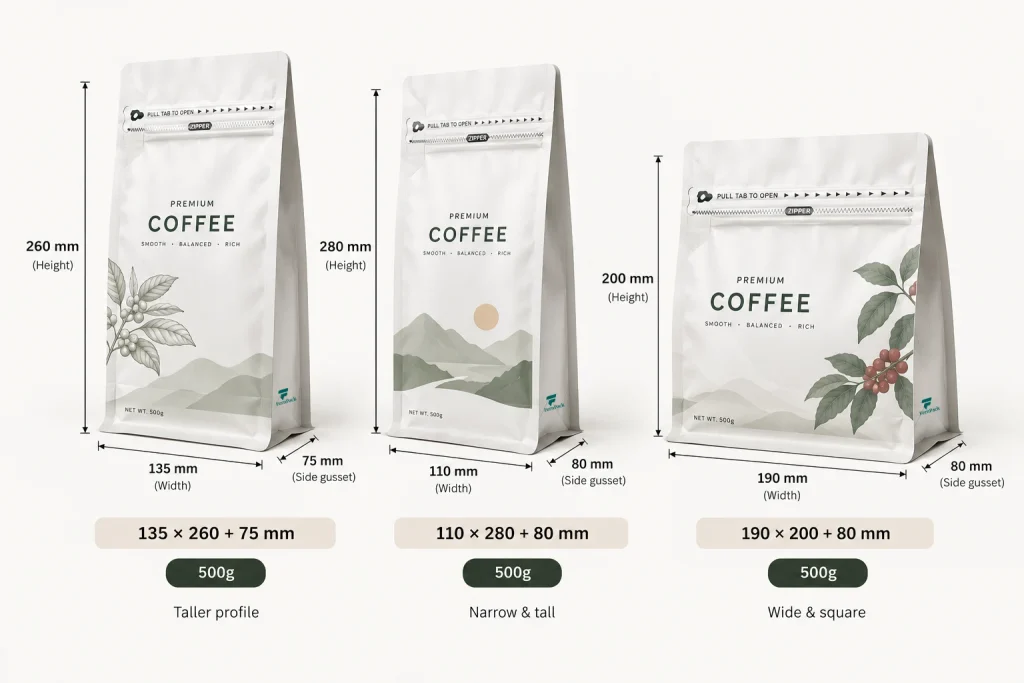
Bag proportions can vary even when the format and intended coffee weight remain the same. For example, FernPack has worked with several flat bottom dimensions for 500g coffee packaging, including。135 × 260 + 75 mm, 110 × 280 + 80 mm, and 190 × 200 + 80 mm.
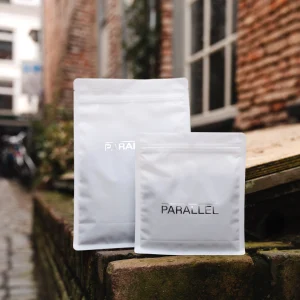
These dimensions create noticeably different package shapes. The 110 × 280 + 80 mm bag has a narrow, vertical profile, while the 190 × 200 + 80 mm version provides a wider front panel with less height. The 135 × 260 + 75 mm option provides a taller profile than the square-style bag without being as narrow as the slim version.
The choice depends partly on how you plan to present the finished package. A narrower bag may work better when shelf width is limited or when the artwork is designed around a vertical layout. A wider bag provides more horizontal space for branding and product information, but also takes up more shelf width.
Different bag dimensions can also affect material usage and production costs, so it’s worth comparing quotations based on the exact specifications rather than assuming all 500g bags will have the same price.
Why usable filling space matters more than external dimensions
A coffee bag may have enough overall capacity for the intended weight but still be difficult to fill and seal properly. For bags with a resealable zipper, the usable filling space is limited by the zipper position and the clearance needed for the top heat seal. During filling, the coffee should remain below the zipper so the bag can be closed and heat-sealed without interference.
For example, a 250g flat bottom bag may physically hold 250g of whole beans, but if the beans reach too close to the zipper, filling and sealing can become difficult. Coffee beans caught in the zipper or sealing area may prevent the package from closing or sealing properly. This is why the fill level matters just as much as the bag’s external dimensions.
The filling method also affects which dimensions will work best. Manual filling generally allows more flexibility in opening the bag and settling the coffee before sealing. Automated packing equipment, however, may require specific pouch widths, heights, and opening characteristics to feed, fill, and seal the bags consistently.
How to confirm coffee bag size before bulk production
Reference dimensions are a useful starting point, but the best way to confirm a coffee bag size is to test physical samples with the coffee you plan to pack. Before placing a bulk order, request samples in the proposed dimensions and fill them with the intended net weight.
Once filled, close and seal the bag using your normal packing process. Check the finished package for its shape, stability, and overall appearance. If the bag looks overly stretched, too loose, or different from what you expected, comparing another size or adjusting the bag proportions may help.
If you plan to use one bag size across multiple coffees, test it with the products that are likely to occupy the most space. For automated packing, check the proposed dimensions against your equipment specifications and, where possible, run a trial with the actual bags.
After confirming the size, finalize the bag dimensions before preparing the production artwork. This helps ensure that the design layout matches the approved packaging structure and reduces the risk of changes later in the ordering process.
Choosing the right coffee bag size
For most coffee packaging projects, starting with an existing bag size is more practical than developing a new dimension from scratch. Common sizes are often suitable for standard retail weights, and using an established specification can simplify sample selection, quotation comparisons, and the ordering process.
Custom dimensions become more relevant when the available sizes don’t suit your packaging design or operational requirements. For example, a brand may want a wider front panel for its artwork, a shorter package for a particular retail display, or dimensions that fit its existing filling equipment. In these cases, adjusting the bag’s proportions may be worthwhile, provided the revised size is suitable for the intended coffee weight.
There is also a cost consideration. Changing the bag dimensions can affect material consumption and, depending on the production method, may introduce additional setup or tooling requirements. For smaller orders, ask your supplier to quote both an existing size and the proposed custom dimensions. This makes it easier to see whether the difference in cost is worthwhile for your packaging design or filling requirements.
How FernPack helps buyers confirm coffee bag sizes
FernPack can help you review suitable coffee bag dimensions based on your intended coffee weight, preferred bag format, and packaging design. We can also provide physical samples so you can check the fit and finished appearance before placing a bulk order.
Need help choosing your coffee bag size?
Share your packaging requirements with FernPack, and we’ll help you review suitable dimensions and sample options.