For specialty coffee roasters comparing custom printed vs. stock coffee bags, the decision often comes down to more than order quantity.
Stock bags offer flexibility because the same packaging inventory can often be used across different coffees. Labels can carry changing product information, and unused bags are not necessarily tied to one SKU. Custom printing gives you more control over the finished package and how consistently your brand is presented across the coffee range.
But low volume does not automatically mean stock packaging. Digital printing can make multiple custom designs practical within a relatively small overall order. In one production example, 1,000 bags sharing the same bag specification were divided across eight designs. This shows that a low quantity per design does not automatically rule out custom printing. Whether custom printing is the better choice, however, still depends on how stable those designs are and how confidently the brand expects to use the bags allocated to each one.
The better choice depends on what you need the packaging to do: remain flexible as coffees change, create a more complete brand presentation, reduce finishing work during packing, or balance several of these priorities.
This guide looks at stock and custom printed coffee bags from that practical perspective, so you can choose an approach that fits your coffee range and the way your business actually operates.
Custom printed vs. stock coffee bags: What’s the difference?
Stock and custom printed coffee bags can use similar pouch formats, barrier structures, zippers, and degassing valves. Choosing custom printing does not by itself mean better coffee protection; barrier performance depends primarily on the packaging structure and specification. The more relevant difference in this comparison is how the packaging is produced and how much flexibility remains after ordering.
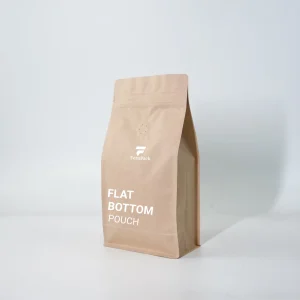
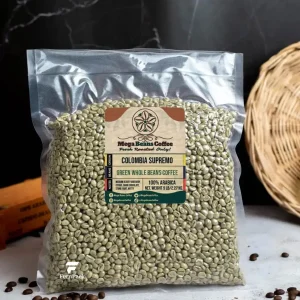
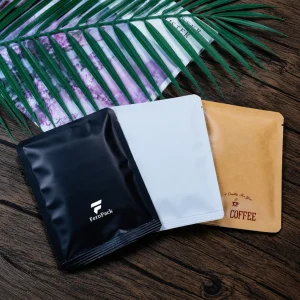
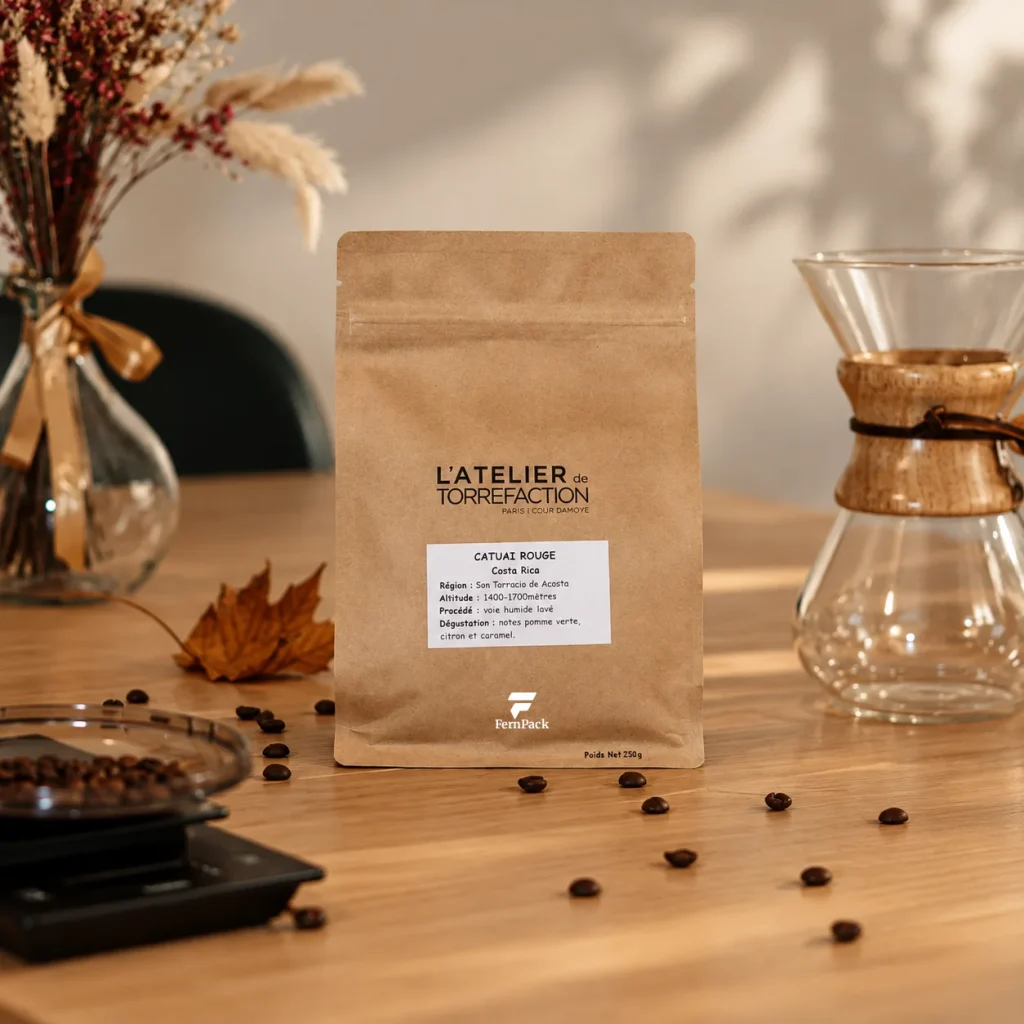
Stock coffee bags are pre-made rather than produced specifically for one customer’s artwork. You select from the sizes, materials, finishes, and colors currently available, then add product or brand information separately if needed. Labels provide the most flexibility because the same pouch can be used across different coffees. Hot stamping offers a different approach: a logo or other simple brand element can be applied directly to a stock pouch without requiring full-surface printing. For brands built around a minimal packaging style, the stock bag and hot-stamped logo can be the intended finished design rather than a temporary alternative to custom printing.
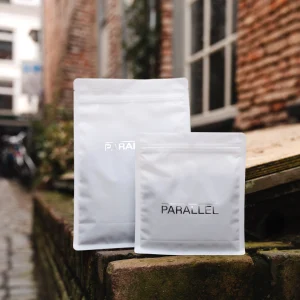
Custom printed coffee bags take a different approach. The artwork becomes part of the packaging itself, giving you control over the full printable area rather than working within the size and position of a label. The right printing method depends on the order itself. If you are already considering custom printing, our guide to digital vs. gravure printing for coffee bags explains that choice in more detail.
Neither approach is automatically better. Stock packaging gives you more freedom to decide what goes on the bag after the pouch has been purchased, while custom printing gives you more control over what the finished package looks like from the start.
The useful question, then, is not simply which bag is cheaper. It is where your coffee business needs flexibility—and where it needs consistency.
When stock coffee bags make more sense
Stock coffee bags are often the more practical choice when the packaging needs to accommodate frequent changes. A new coffee may sell faster or slower than expected, an origin may only be available for one season, or product information may need to be updated before the next packaging order. In these situations, the value of a stock bag is the ability to keep the pouch consistent while changing the information applied to it.
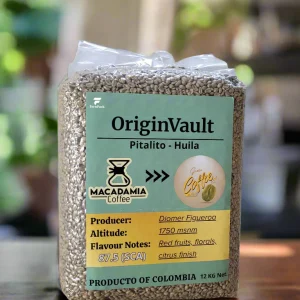
This is particularly useful for roasters that regularly rotate single origins, microlots, or seasonal coffees. A roaster might use the same matte pouch across the range and change the label for each coffee, including the origin, process, tasting notes, roast information, or other product details. When one coffee sells out, the remaining unlabelled bags can still be allocated to another coffee rather than becoming obsolete with that SKU.
The same logic applies when a brand is still refining its packaging. If the artwork, net weight, product range, or other information is likely to change, committing too much inventory to a finished printed design can create unnecessary waste. A stock pouch leaves more room to make those changes later, with labels carrying variable information or hot stamping providing a simpler permanent brand element.
Availability can also matter. When the required size and specification are available from stock, the bags can usually be dispatched without waiting for a new printing and bag-making production cycle. This can be useful when a launch date is close, packaging has run out unexpectedly, or a new coffee needs to go on sale before custom production can be completed.
The strongest reason to choose stock packaging, therefore, is not simply that the order is small. It is that the ability to change, reuse, or reallocate the packaging is particularly valuable for the way the coffee range is managed.
When custom printed coffee bags make more sense
Custom printing starts to make more sense when the packaging becomes an important part of how the coffee is presented and recognized. This does not require a roaster to reach a particular size first. What matters more is whether the brand knows what it wants the package to do and whether the design is stable enough to use through the expected inventory.
One of the clearest advantages of custom printed coffee bags is control over the finished package. A label has to work within a defined area of an existing pouch, while custom printing allows the artwork to be developed around the whole bag. Colors, typography, illustrations, product information, and the relationship between the front, back, and side panels can all be considered as one packaging design.
The role of that design can vary depending on where and how the coffee is sold. A package presented on a retail shelf, supplied to wholesale accounts, shipped through an online store, or handed directly to customers in a café may have different requirements. If a label already provides the presentation and product communication the brand needs, full custom printing may add little value. When the pouch itself is intended to be a recognizable part of the brand experience, the larger printable area becomes more useful.
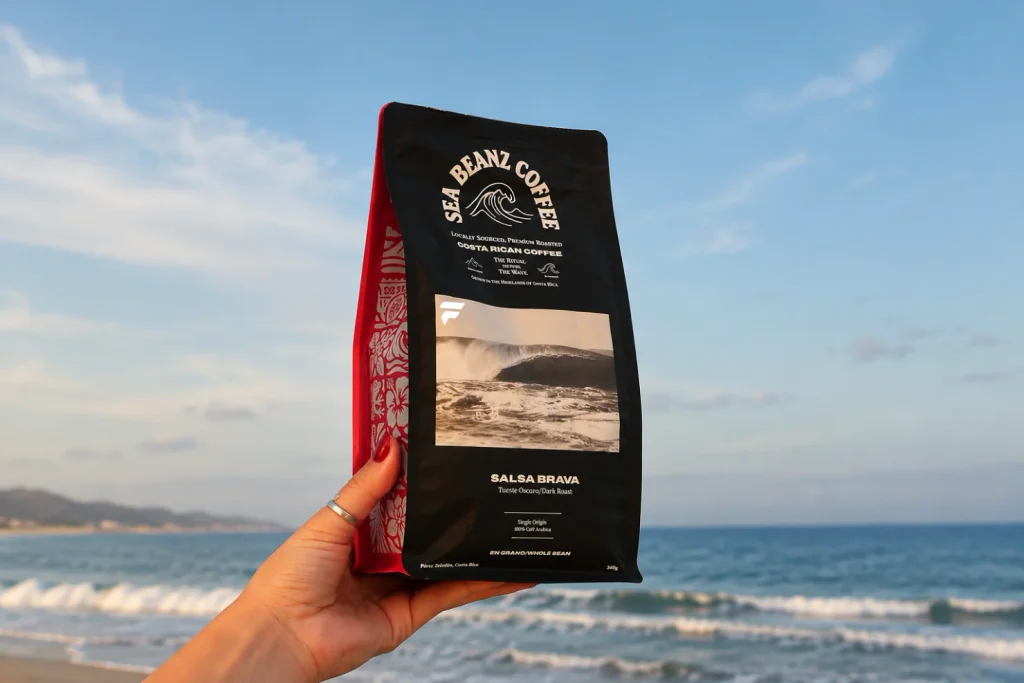
Digital printing also means that a relatively small custom packaging order does not necessarily have to use only one artwork. When multiple designs share the same bag size, pouch format, material structure, and main production specifications, the overall order can often be divided between those artworks. This can be useful for a planned coffee range in which each product needs its own visual identity without requiring a large quantity of every individual design.
There is an operational consideration as well. Applying labels adds a separate step to the packing process. At lower volumes this may be easy to manage, while at higher volumes the time, equipment, and consistency involved in label application can become more relevant. Custom printing does not eliminate every packing step, but the main artwork is already part of the pouch. For products that are reordered with the same design, this can simplify the packaging workflow while maintaining a consistent appearance from bag to bag.
The trade-off is that printed inventory is committed to its artwork once it has been produced. If the coffee changes, the design is revised, or information printed directly on the pouch becomes outdated, the remaining bags cannot be reassigned as easily as a common stock pouch. Custom printing therefore makes the most sense when the value of a finished, consistent package justifies committing that inventory to the design.
What should be printed on the bag, and what should stay flexible?
Choosing between stock and custom printed coffee bags does not always have to be an either-or decision. For many specialty coffee roasters, a better starting point is to separate the information that stays consistent across the product range from the details that change from one coffee to another.
Brand elements such as the logo, core colors, typography, and other parts of the visual identity usually change less often. Coffee-specific information is different. Origin, variety, processing method, tasting notes, lot information, and roast details may change whenever a new coffee is introduced. Printing all of this directly on the pouch can work well for established, repeatable products, but it can reduce flexibility when coffees rotate frequently.
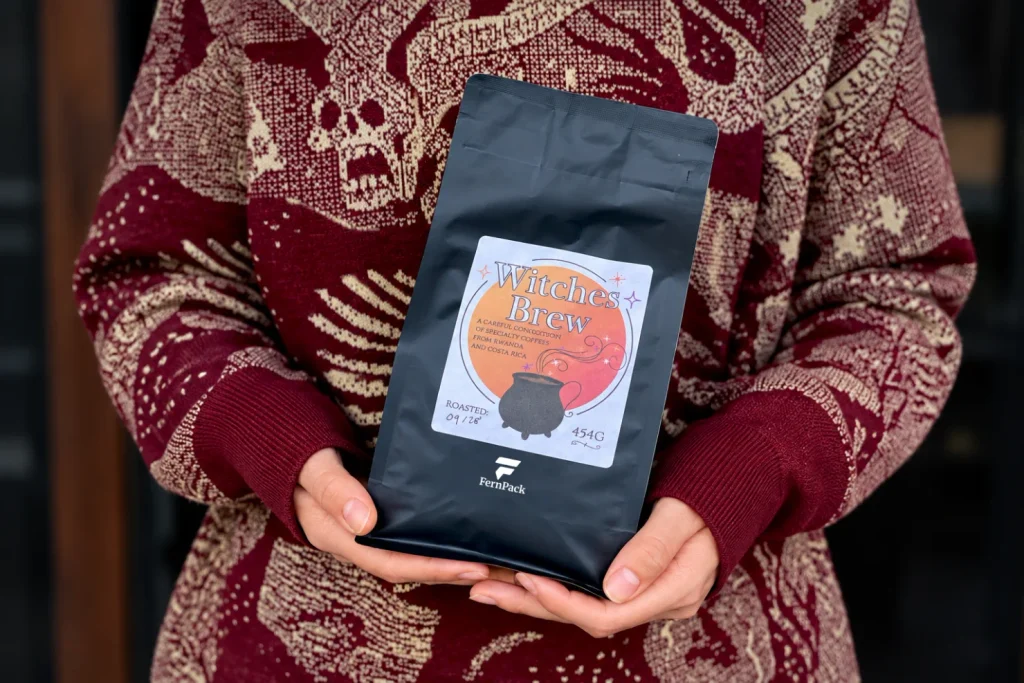
A stock bag with a product label leaves most of that information open to change. At the other end, a fully custom printed bag can give an established coffee its own complete design. Between those options is a practical hybrid approach: a custom printed base bag with variable labels.
With this approach, the main brand design and other fixed information are printed directly on the pouch, while an intentional area is reserved for the details that need to change. When a new origin or lot is introduced, the roaster updates the label rather than producing an entirely different base bag.
This can work particularly well for a specialty coffee range built around rotating origins. The pouch can still carry a consistent, developed brand identity, while the roaster keeps the freedom to change coffee-specific information. Unused base bags are not tied to one origin or lot and can continue to be used elsewhere in the range.
The right split depends on both the brand design and how the coffee range is managed. A year-round coffee with established artwork may justify its own fully printed bag, while a brand built around a minimal visual identity may achieve the intended look with a solid-color stock pouch and hot-stamped logo. For coffees that rotate more frequently, product-specific details can remain on a label, whether that label is applied to a stock bag or to a custom printed base bag. The same roaster may therefore use different packaging approaches across its range rather than applying one system to every coffee.
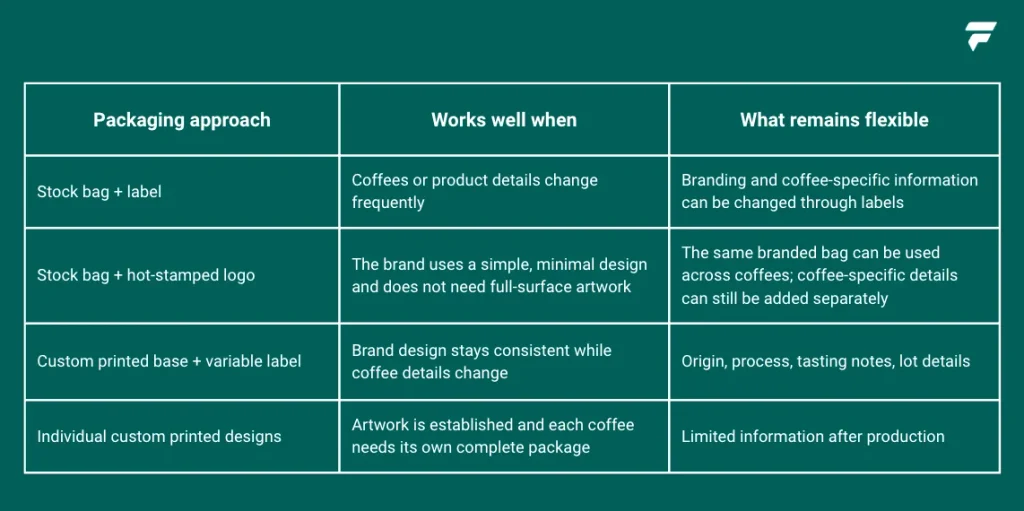
Before finalizing the artwork, it is worth asking one practical question: if this coffee changes or sells out, which parts of this bag would you still want to use? The answer often makes it clearer which information belongs in the printed design and which should remain flexible.
Same order size, different packaging decisions
Order quantity matters, but it does not tell you on its own whether stock or custom printed coffee bags are the better choice.
Consider an order of 1,000 bags. In one FernPack digital printing project, that quantity was divided across eight custom designs, with approximately 125 bags per design. The quantity for each artwork was relatively small, but the customer wanted each coffee to have its own finished package design. Because the designs shared the same bag specification, digital printing allowed the overall order to be divided accordingly.
The same 1,000 bags could be handled differently for a frequently changing coffee range. If origins, lots, or product details are updated throughout the year, a common stock pouch with variable labels keeps more of the inventory available for different coffees. Instead of deciding in advance how many printed bags to allocate to each SKU, the roaster can apply the relevant label as the coffee is packed.
There is also the hybrid option. If the overall brand design is established but coffee-specific information changes regularly, the 1,000 bags could share one custom printed base design, with space reserved for variable information. The brand presentation remains consistent without committing the entire packaging order to individual coffees.
The purchase quantity is the same in all three situations. What changes is how much of that inventory needs to be committed to a particular design or coffee.
This is why quantity per SKU is useful for planning, but it should not become a rule for choosing the packaging method. What matters alongside quantity is what will remain stable while those bags are being used. If the designs and product range are well defined, allocating inventory to individual printed designs may be reasonable. If origins, lots, or product information change frequently, keeping more of the packaging interchangeable may be more valuable.
Compare the full packaging cost, not just the bag price
When comparing custom printed vs. stock coffee bags, it is tempting to put the two pouch prices side by side and choose from there. That comparison is useful, but it is only complete when both prices represent packaging that is actually ready to use.
A stock bag may still need a printed label, hot stamping, or another form of branding before it becomes the finished package your customer sees. Labels also have to be printed, managed across different coffees, and applied to the bags. At lower volumes, that extra work may be minor and well worth the flexibility it provides. As volume increases, however, it is worth considering whether those additional steps are still the most efficient way to handle the packaging.
With a custom printed bag, the main branding and artwork are already part of the pouch when it arrives. This can remove some finishing work at the roastery, but the trade-off is different: you are deciding in advance how much packaging inventory to commit to each design. If that design will be used consistently, this may not be a concern. If the coffee, artwork, net weight, or other printed information changes before the bags are consumed, part of that inventory can lose its value even though the bags themselves remain physically usable.
This is why inventory usage matters alongside unit price. A lower unit price can look attractive, but if achieving it requires substantially more packaging than you expect to use within a reasonable period, it is not automatically the better purchase. The same applies in the other direction: choosing stock bags simply because the pouch price is lower can overlook the cost and time of labels or other finishing work repeated with every bag.
A more useful comparison is to look at what it takes to get each option from purchase to finished packaging. For stock bags, that means considering the pouch together with labels or other branding, the work required to apply them, and the flexibility of using the remaining inventory across different coffees. For custom printing, it means looking at the finished printed bag, how the order is divided between designs, and how confidently each design can be used before the next packaging change.
There is no universal point at which custom printing becomes cheaper than stock packaging. The answer depends on the number of designs, quantities, packaging usage, and the way the roaster handles labelling and packing. The useful comparison is therefore not simply stock bag price versus custom bag price, but the cost and inventory commitment required to produce the finished package you actually need.
Five questions to ask before choosing your coffee bags
Once you understand the differences, the decision becomes less about which option is better in general and more about how each one fits the way you sell and manage your coffee. Before choosing, consider these five questions together.
1. How stable is your coffee range?
Start with how often the coffees themselves change. A core blend or established retail coffee may remain in the range for a long time, making it easier to commit packaging to a dedicated design. Rotating origins, seasonal releases, and short-run lots create a different situation because the coffee may change before a large quantity of packaging is used.
The important question is not simply how many SKUs you have, but how predictable those products are over the period in which the bags will be used. The more frequently the range changes, the more valuable interchangeable packaging can become.
2. How many bag designs do you actually need?
Separate the parts of the package that belong to your long-term brand identity from the information that changes with the coffee. Your logo, brand colors, and core visual identity may remain consistent, while origin, variety, process, tasting notes, roast information, or lot details can change from one coffee to the next.
If only a simple brand element such as your logo needs to remain fixed, a stock bag with hot stamping may be enough. If the broader package design stays consistent while coffee-specific information changes, a custom printed base bag with variable labels can provide more design control without fixing every detail in advance. If each coffee has its own established artwork, individual custom printed designs may be more appropriate.
3. How important is the bag itself to your brand presentation?
Consider where customers encounter the package and how much of the brand experience needs to come from the bag itself. A coffee sold primarily through a café may work perfectly well in a solid-color stock pouch with a label or a simple hot-stamped logo. A product displayed on retail shelves, supplied to wholesale accounts, or sold through an online store may place more emphasis on the complete package design.
This does not mean that more printing automatically creates better packaging. A minimal stock pouch with a well-executed logo can be a deliberate brand choice, just as a fully printed pouch can be. The question is how much visual communication your packaging actually needs to support the way the coffee is positioned and sold.
4. How long will it take you to use the bags you are ordering?
Instead of looking only at the total order quantity, consider how that quantity will be divided between products and how long each portion is likely to remain in inventory. A design that will be used steadily over the next few months presents a very different inventory decision from packaging produced for a seasonal coffee or limited lot.
This becomes especially important when a lower unit price requires ordering more packaging. The larger order may make sense if the bags will be consumed predictably, but the saving matters less if part of the inventory risks becoming outdated before it is used.
If you need to work out a practical order quantity from monthly usage and replenishment time, our guide to coffee bag printing MOQ looks at that decision in more detail.
5. How much packaging inventory are you comfortable committing to each design?
Once a bag is produced with fixed branding or product information, that inventory becomes less flexible. Before ordering, consider how confidently you expect each design to be used before the coffee, artwork, or product details change.
The more stable the design and demand, the easier it is to commit inventory to dedicated packaging. When either is uncertain, keeping more of the packaging interchangeable can reduce the risk of unused bags.
Choose the packaging approach that fits your coffee range
The answers do not have to point to one packaging method across your entire range. A year-round blend may be well suited to its own custom printed bag, while seasonal coffees use a shared printed base bag with variable labels. Another roaster may prefer stock bags across most of the range because keeping the packaging interchangeable is more valuable. These can all be deliberate packaging decisions rather than temporary steps toward a single “final” solution.
What matters is that the packaging follows the way your coffee range actually works. Look at which products are stable, which details change regularly, how quickly each design will be used, and how much inventory you are comfortable allocating to individual artworks. That usually gives a clearer direction than starting with MOQ or pouch price alone.
If you are comparing stock, hybrid, or fully custom printed coffee bags, you can share your bag size, expected quantities, number of designs, and how often your coffees change with FernPack. We can help you compare the practical options before you commit to a particular packaging setup.