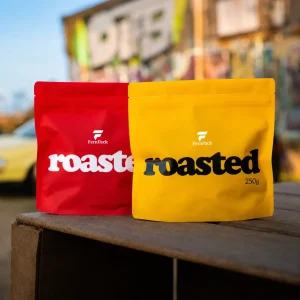
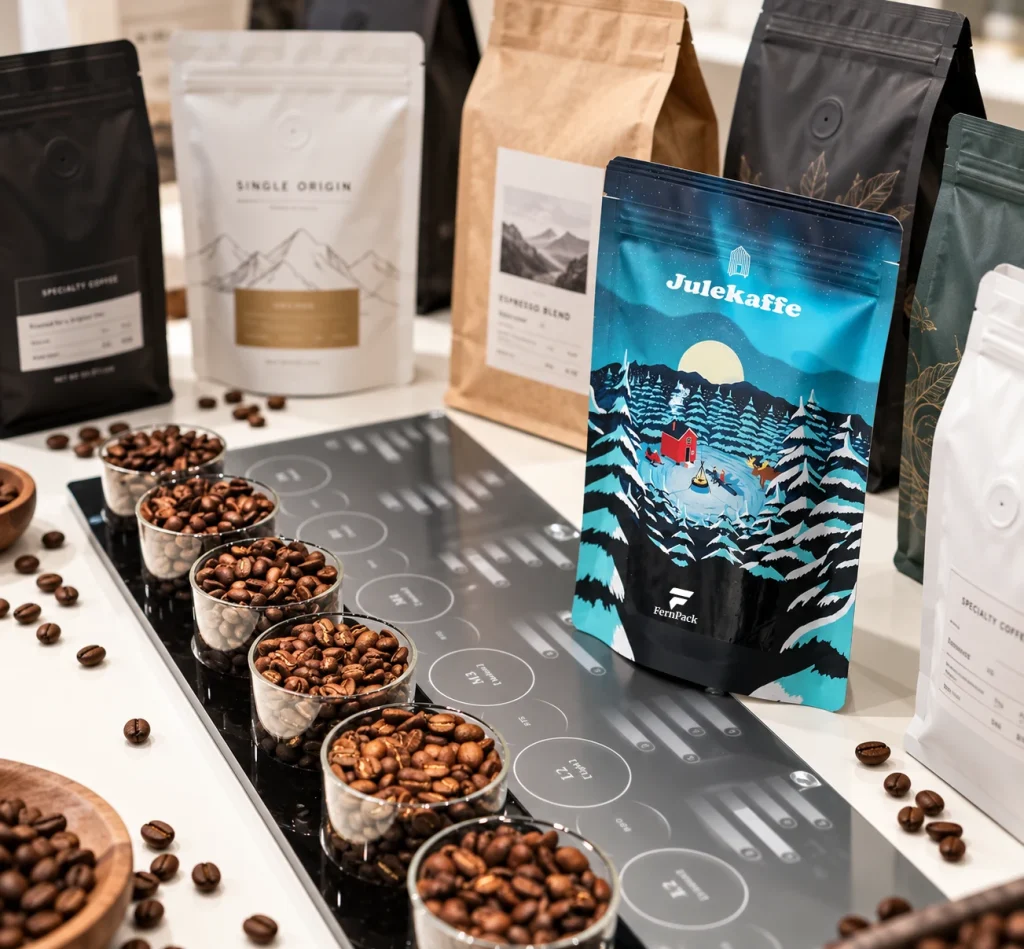
If you sell light, medium, and dark roast coffees, it is reasonable to wonder whether each one needs a different coffee bag. Roast level does affect what happens to coffee after roasting, particularly how carbon dioxide is retained and released, but in most cases it should not be the starting point for choosing a bag style, material structure, or size.
For packaging buyers, the more useful question is whether the coffees actually place different demands on the package. A light-roast Ethiopia and a darker espresso blend may look and behave differently as coffees, but if both are sold as 250 g whole bean products, packed under similar conditions, and expected to follow a similar distribution cycle, they may still work well in the same bag specification. On the other hand, two coffees with the same roast level may need different packaging if one is sold as whole bean and the other ground, or if one is packed shortly after roasting while the other is allowed to degas for longer before sealing.
For a specialty roaster managing several origins, blends, and seasonal releases, creating a different packaging specification for every roast can add unnecessary complexity to purchasing and inventory. A better approach is to understand where roast level genuinely affects packaging performance, establish a specification around those requirements, and then determine whether that specification can be used across more than one coffee.
How roast level affects coffee after roasting
Roasted coffee continues to release carbon dioxide after it leaves the roaster. Some of this gas escapes relatively quickly, while some remains trapped within the porous structure of the beans and is released gradually over time. If the coffee is sealed while degassing is still active, the package has to accommodate what happens after filling rather than simply hold the coffee at the moment it is packed.
Roast level is one factor in this process. Under comparable conditions, darker roasts generally retain and release more carbon dioxide than lighter roasts, while changes in the physical structure of the bean during roasting also influence how gas is stored and released. This is useful information when considering packaging, but the roast description does not tell the whole story. Roast development, roasting conditions, the coffee itself, and the time between roasting and packing can all affect degassing, which means two coffees described as “medium roast” will not necessarily behave in exactly the same way after they enter the bag.
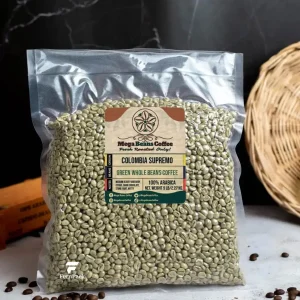
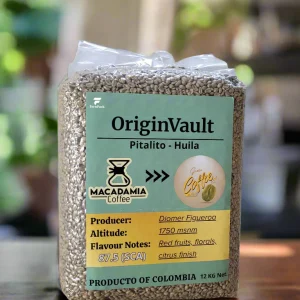
Whether the coffee is whole bean or ground adds another important variable. Grinding opens the internal structure of the roasted bean and allows trapped gas to escape much more quickly, so the same coffee can have a different degassing profile depending on the form in which it is sold. The timing between roasting, grinding, and packing then becomes part of the packaging decision as well.
From a purchasing perspective, this is why roast level is useful background information rather than a complete packaging specification. Knowing that a coffee is dark roast tells a supplier something about the product, but knowing whether it is whole bean or ground, how soon it is packed, and how it will be stored and distributed provides much more context for deciding what the bag actually needs to do.
How should roast level affect your coffee bag specification?
A finished coffee bag brings several decisions together: its format and dimensions, the material structure, the way it closes, and whether a degassing valve is required. Roast level can influence some of those decisions, but usually indirectly. It is more useful to evaluate each part of the specification according to its function than to try to match a particular type of bag to a light, medium, or dark roast.
Bag style is usually a format decision
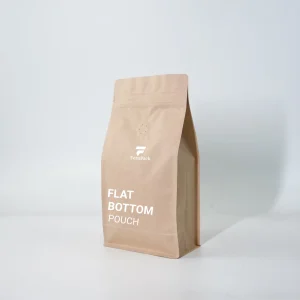
Flat bottom bags, stand-up pouches, side gusset bags, and quad seal bags can all be used successfully for roasted coffee. The choice between them is normally driven by pack size, shelf presentation, filling method, closure requirements, and budget. There is no technical reason that a dark roast must use a flat bottom bag while a light roast should use a stand-up pouch. If two coffees are sold in the same weight and pass through the same packing process, the same bag format may be entirely suitable for both.
The same net weight does not always mean the same bag volume
Bag capacity requires a little more attention because coffee is sold by weight while the bag has to accommodate volume. Beans expand and change in density during roasting, and different coffees and roast conditions can result in noticeably different bulk volumes. A 250 g specification therefore describes the amount of coffee being sold, not a fixed volume that every 250 g coffee will occupy inside the package.
For a roaster selling several 250 g coffees, this does not mean that each origin or roast needs its own bag dimensions. In many cases, one well-selected size will comfortably cover the whole range. The important point is to confirm that assumption with the actual coffee, particularly when the desired bag is compact or the finished appearance needs to be tightly controlled. If one coffee fills the bag comfortably but another leaves too little room above the product for closing the zipper and making a reliable heat seal, the nominal 250 g capacity has not told you enough. A simple fill test is much more useful in that situation.
Choose the barrier for the required protection
The material structure should be approached in much the same way. Its job is to provide the level of protection the coffee requires against oxygen and moisture while helping retain aroma throughout storage and distribution. Depending on the package design, light protection may also be relevant. Those requirements are connected more directly to the intended shelf life, packing conditions, distribution route, and required packaging performance than to whether the coffee is described as light or dark roast.
This is why it is difficult to justify rules such as “dark roast needs foil” or “light roast can use kraft.” For example, a conventional high-barrier structure such as MOPP/VMPET/PE and a recyclable mono-material structure such as PE/EVOH-PE solve the packaging problem in different ways, but neither should be selected simply because the coffee is light or dark roast. The appropriate structure needs to be evaluated against the protection required from the finished package.
Material structure alone should not be treated as a guarantee of a particular shelf life either. Film specification, measured barrier performance, seal integrity, filling conditions, and the storage environment all contribute to how the finished coffee bag performs.
Degassing depends on more than the roast level
The degassing valve is the part of the package where roast conditions become more directly relevant. When freshly roasted coffee is sealed while it is still releasing a meaningful amount of carbon dioxide, gas can accumulate inside the bag. A one-way valve provides a controlled route for that gas to escape while limiting air entry through the valve, helping the package manage continued degassing after sealing.
Darker roasts often degas more actively than lighter roasts, but even here the roast label should not become a simple yes-or-no rule for valve selection. Consider two similar medium-roast coffees: one is packed shortly after roasting, while the other is allowed more time to degas before it is sealed. Although both carry the same roast description, they may enter the package with different amounts of carbon dioxide still to release. The same is true when comparing whole bean and ground coffee, because grinding changes how quickly trapped gas escapes.
For this reason, there is no universal number of hours or days after roasting that determines whether every coffee requires the same valve arrangement. What matters is whether the finished package can manage the actual conditions under which the coffee is packed. If a roaster already uses one proven valve configuration across several coffees and it performs reliably throughout the range, there is usually little reason to change it simply because a new SKU has a different roast level.
Can light, medium, and dark roasts use the same coffee bag?
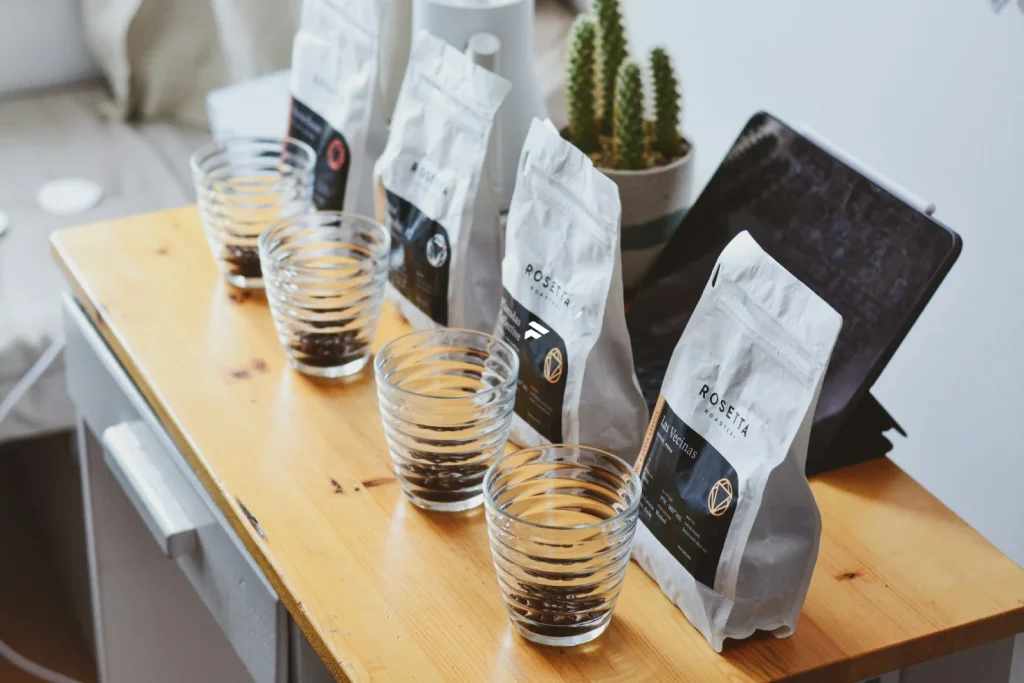
For many specialty coffee roasters, they can. Once the bag has been tested with the products involved, using one physical specification across several coffees can be a more practical purchasing strategy than treating every roast as a separate packaging project.
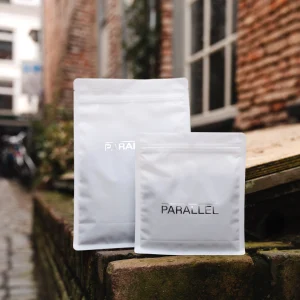
Consider a roaster selling a 250 g light-roast Ethiopia, a 250 g medium-roast Colombia, and a 250 g dark-roast espresso blend. If all three are sold as whole beans, packed using the same production process, require a similar shelf life, and fit comfortably within the same bag dimensions, there is a strong practical case for starting with one 250 g bag specification rather than developing three different constructions. The material structure, zipper, valve, dimensions, and bag format can remain consistent, while the artwork changes to distinguish the individual coffees.
This becomes increasingly useful as the product range grows. A specialty roaster may begin with two or three core coffees and later add a decaf, rotating single origins, seasonal releases, or limited microlots. If every addition creates a new bag size, laminate, valve configuration, or closure specification, packaging inventory becomes more complicated very quickly. Standardizing the physical bag where possible allows purchasing to focus on something that often varies much more substantially between SKUs: how many printed coffee bags are actually needed for each design.
Those quantities do not need to be equal. A house espresso blend might sell steadily throughout the year while a seasonal Ethiopia is available for only a few months, so the packaging demand for the two designs can be very different even though the bags themselves share the same construction. Keeping the physical specification consistent does not remove that flexibility; it simply avoids introducing additional packaging variables where they provide no practical benefit.
Standardization should still be earned rather than assumed. Before using one bag across several coffees, the roaster should confirm that each product fits properly, that the packing process leaves sufficient room for closing and heat sealing, that the valve arrangement can manage the expected degassing conditions, and that the material provides the required protection throughout the intended distribution period. If those conditions are satisfied, changing the packaging construction simply because one coffee is light roast and another is dark roast is unlikely to improve the package.
When does the packaging specification need to be reconsidered?
Once a bag specification has been proven across a coffee range, adding another roast does not automatically mean starting again. It makes more sense to review the specification when something changes that affects how the product fills the bag, behaves after packing, or needs to be protected before it reaches the customer.
A change in net weight is an obvious example. Moving from a 250 g retail bag to a 1 kg format changes the required volume and may also affect filling and handling. Less obvious is a change in bulk volume at the same net weight. If a new 250 g coffee occupies substantially more space than the products already using the bag, a fill test may show that the existing dimensions no longer leave enough working space for filling, zipper closure, or heat sealing. In that case, the reason for reviewing the size is the physical fit of the product rather than its roast description.
Moving between whole bean and ground coffee is another reason to check the specification. Grinding changes how the product settles in the package and how quickly trapped carbon dioxide is released, so a bag developed around whole-bean coffee should not automatically be assumed to behave identically with a ground product. The same principle applies when the packing process changes. If a roaster begins sealing coffee much sooner after roasting than before, or introduces different filling and sealing equipment, the existing packaging should be evaluated under those new conditions.
Shelf-life and distribution requirements can also justify a change. Coffee sold directly through a local café may move through inventory relatively quickly, while another SKU may spend weeks in international transport before entering wholesale or retail distribution. If the expected storage period or distribution environment changes substantially, the required barrier performance should be reviewed accordingly. A similar review is appropriate when a brand decides to move from a conventional laminate to a recyclable or compostable structure, because that changes the packaging specification itself and should be evaluated against the required performance.
In each of these cases, there is a practical reason to review the bag because something about the product, packing process, or route to the customer has changed. A change from medium to dark roast, by itself, does not create the same requirement.
How FernPack evaluates packaging for a range of coffees
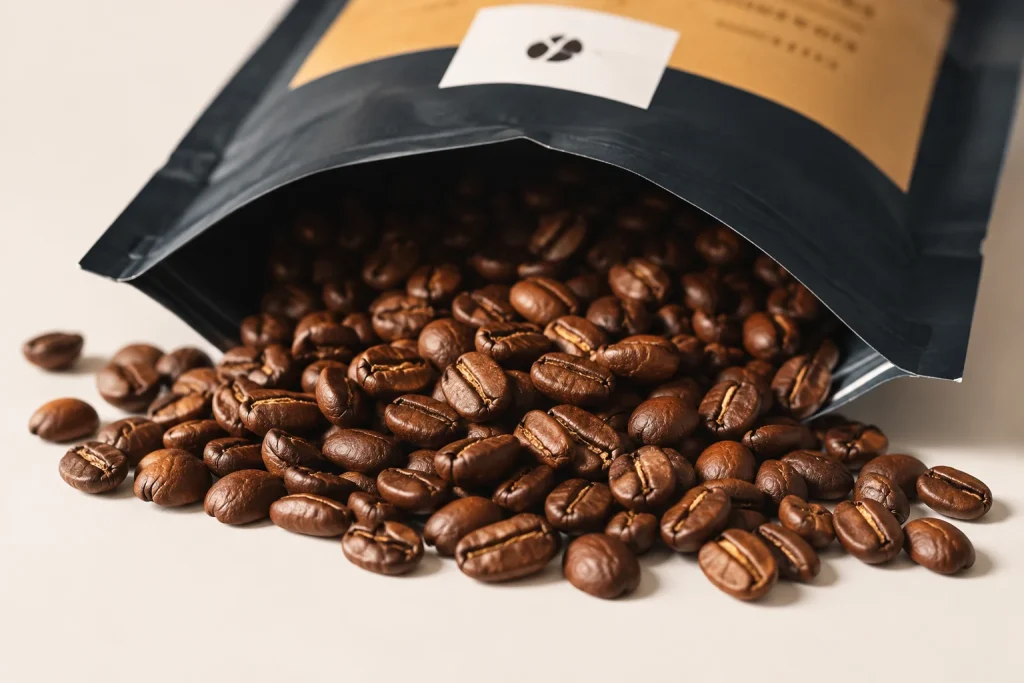
When a roaster asks FernPack about coffee packaging for different roast levels, we first look for the requirements those products share rather than immediately assigning a different bag to each one. In practice, we normally start with the net weight and whether the coffee is whole bean or ground, then look at the preferred bag format, how soon the coffee is packed after roasting, and the expected shelf life and distribution route.
If several SKUs will use the same package, we also want to understand how many designs are involved and the expected quantity for each design. A core blend and a seasonal single origin may be able to share exactly the same bag construction even though their packaging volumes are very different. Keeping those two decisions separate—the physical bag specification and the quantity required for each artwork—can make a multi-SKU packaging project much easier to plan.
With that information, we can usually determine whether the project should begin with one common bag specification or whether one of the coffees genuinely needs to be treated differently. For a new size or a coffee with an unusual filling volume, we still recommend checking the fit with the actual product before committing to a larger production run. Dimensions on a specification sheet can tell us how large the bag is, but a sample or fill test gives a much clearer answer about usable filling space, sealing room, and the finished shape of the package.
The objective is not to make every coffee use the same bag at all costs, nor is it to create a different package for every roast. It is to establish the simplest specification that reliably meets the requirements of the coffees being sold. When one bag can do that across several roast levels, standardizing it can make purchasing and inventory easier without compromising the performance of the package.
Do you need different coffee packaging for different roast levels?
In most cases, roast level by itself is not a reason to use a different coffee bag. Light, medium, and dark roasts can often share the same dimensions, material structure, valve, and closure system when they are packed in a similar way and have comparable shelf-life and distribution requirements.
Roast level still matters because it forms part of the coffee’s degassing behavior, but it should be considered alongside the factors that directly affect the package: whether the coffee is whole bean or ground, how much volume it occupies, when it is packed after roasting, how long it needs to remain protected, and how it will be distributed.
For a specialty roaster managing several coffees, the more useful question is not “Do I need a different bag for each roast?” but “Can one proven packaging specification reliably cover this range of products?” If the answer is yes, keeping the bag construction consistent and changing the artwork between coffees is often the simpler and more practical way to manage packaging.