Green coffee quality can be lost at several stages between harvest and delivery to the buyer. Some changes develop gradually during storage; others follow a processing error, damaged packaging, or exposure to moisture.
A cooperative sends a sample that cups well. Weeks later, the buyer opens the shipment and finds muted flavour, more broken beans than expected, or a musty note in a few bags. What changed—and when?
Three situations can produce that complaint: the coffee deteriorated after sampling, the approved sample did not represent the shipment, or differences in sampling and preparation affected the comparison. Each requires a different response.
For growers, cooperatives, and traders, protecting quality means controlling the risks at each stage and checking the coffee before it moves onward. When a difference appears, the aim is to narrow down when it arose, using the last comparable check and the first documented sign of a problem.
Harvest and processing: protect green coffee quality before the export lot exists
Quality problems can begin before coffee reaches a drying bed. Uneven cherry maturity, delays before processing, and poor equipment hygiene can affect the coffee that eventually enters the export lot. For washed coffee, poorly managed fermentation can introduce unwanted flavours; incorrect pulper adjustment can damage beans. Growers should sort cherries appropriately, process them promptly, and clean collection containers and processing equipment. The FAO’s Arabica Coffee Manual for Lao PDR identifies these as important controls during harvesting and processing.
At cooperative intake, give deliveries an identity before processing begins. Note the producer, harvest or delivery date, and intended processing method. Keep suspect deliveries separate for assessment rather than allowing their condition to disappear into a larger batch.
For fermentation, use a defined procedure suited to the process and local conditions. Record its start and finish, the checks used to determine the endpoint, and any departure from the procedure. An unusual delay or processing interruption should trigger a review of the affected batch before it joins other coffee.
Later, a cooperative may assemble a commercial lot from separately processed, dried, and assessed batches that meet the intended specification. Preserve the link between those source batches and the finished lot.
This is also where sample representativeness matters. An offer sample drawn from one drying batch cannot automatically represent a shipment assembled from several. Once the final composition and grade are settled, draw a representative dispatch sample. If the finished lot differs from the coffee originally offered, communicate the change and obtain any required buyer approval before shipment.
Drying: check uniformity before combining the batch
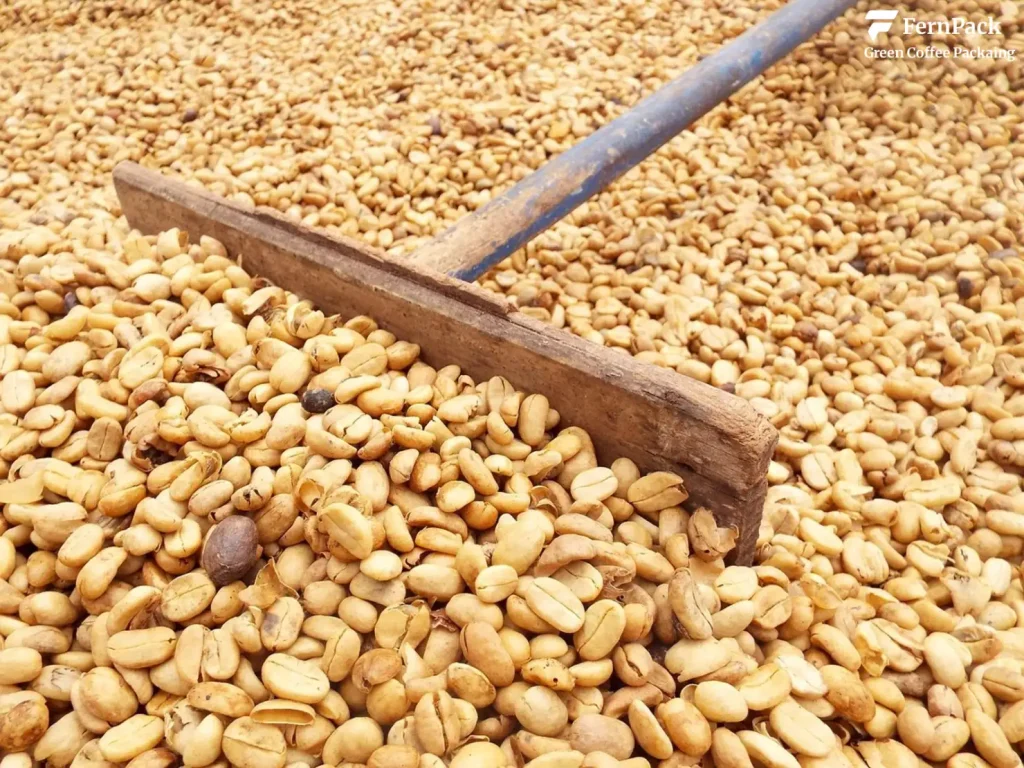
Drying determines whether coffee is ready for storage and subsequent handling. Thick or uneven layers, interrupted drying, and rain exposure can leave some portions wetter than others. Turn coffee appropriately, maintain suitable drying conditions, and protect it from rewetting. Codex’s coffee guidance emphasises uniform drying and checking multiple points within a lot.
Before release, take separate moisture readings from areas with different drying histories: the centre and edges of a bed, for example, or portions exposed to rain. Compare those results before preparing a composite. A satisfactory average can conceal a wetter portion that needs further attention.
If readings fall outside the agreed range or vary enough to question uniformity, hold the affected portion separately. Determine whether further drying or another assessment is appropriate, then recheck it before combining or bagging.
Avoid treating extra drying as an automatic safeguard. Over-dried coffee can become brittle and more susceptible to damage during hulling.
Record the product form—dried cherry, parchment, or hulled green coffee—and use the appropriate meter setting and measurement procedure. Buyer and seller should agree on the acceptance range and test method. ISO 6673:2025 specifies loss in mass at 105°C for green coffee; by agreement, this can be used as a measure of water content and as a reference for calibrating other water-content methods.
Warehouse intake: control exposure and storage time
Coffee may be stored as parchment or dried cherry before milling, then again as graded green coffee before dispatch. Treat these as separate storage periods.
Keep storage areas clean and dry, raise bags off the floor, and leave access for inspection. Separate coffee from fuels, chemicals, and strong odours. These precautions help reduce moisture and taint exposure during storage.
At intake, check moisture, bag condition, and any unusual odour. Assign a storage position as well as a lot code. If a roof leak affects one stack, staff need to identify those bags without holding every lot in the warehouse.
Inspect affected and neighbouring bags before moving or consolidating them. Keep samples from suspect positions separate from representative lot samples. This preserves the evidence needed to decide how much coffee requires further assessment.
Storage loss can also be gradual. In their 2021 study, Volatile compounds indicating latent damage to sensory attributes in coffee stored in permeable and hermetic packaging, Borém and colleagues tracked natural and pulped natural green coffee over 18 months and identified chemical changes associated with later sensory deterioration. Outcomes varied by processing method and packaging, supporting periodic quality checks during storage rather than relying solely on an acceptable intake result.
If dispatch is delayed, review the lot before release. Use its storage duration, exposure history, moisture results, and cup condition to decide which checks need repeating.
Hulling and grading: catch damage before it enters the finished lot
Incorrect huller settings and unsuitable incoming moisture can increase physical damage. Check the first output from each new lot and repeat the inspection after setting changes or a noticeable change in the incoming coffee.
Look for broken beans, incompletely hulled material, and changes in output consistency. If breakage rises, pause to check the machine and incoming coffee. Identify the affected run before its output is mixed with other material.
Keep this process check separate from final grading. A sample taken at the huller shows what the machine produced; a finished-lot sample shows what remained after sorting and grading. Both are useful, but they answer different questions.
After regrading or blending, confirm the outgoing lot’s screen and defect results against the agreed specification. Draw the dispatch sample from that finished lot. A sample retained before the final adjustment may no longer describe the coffee being shipped.
If broken beans are reported only at destination, first check that the samples were drawn and assessed comparably. A difference concentrated in particular bags calls for a different investigation from one found throughout the shipment.
Bagging: choose suitable protection and verify the closure
Packaging helps preserve the condition of the coffee placed inside it. Hold coffee with uneven moisture readings or suspect odours separately for assessment before deciding whether it can be released for packing.
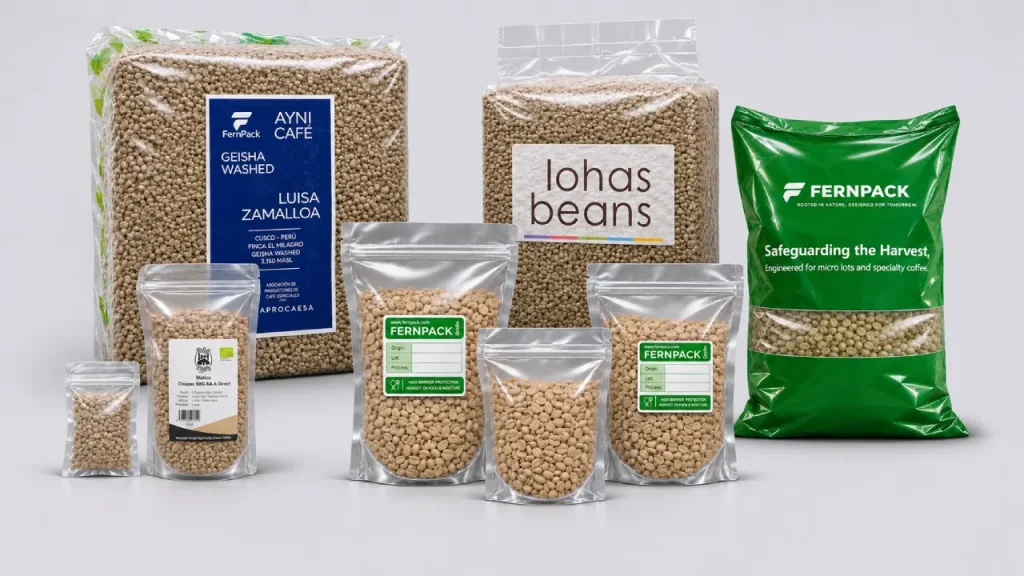
An outer sack provides a unit for handling, stacking, and identification. Where moisture protection is needed, select a suitable barrier liner and verify the closure as part of the complete package. Ask for the relevant material specifications and test the intended bag size, fill weight, and packing equipment together.
Anokye-Bempah et al., Research illustrates why the full arrangement matters. A study simulating a 42-day shipment found that the tested hermetic packaging arrangements helped preserve moisture-related properties compared with jute sacks alone. Desiccants were ineffective without hermetic packaging under those conditions, and sensory testing found no significant difference between hermetic packs with and without desiccants. The study does not establish a universal benefit from adding desiccants.
On the packing line, follow the supplier’s closure instructions. For heat-sealed packs, keep the sealing area clean and flat. Check actual filled bags for trapped beans, wrinkles across the seal, tears, and punctures. Confirm that the outer packaging does not strain the closure.
A recurring defect at the same location is a reason to inspect the packing setup before continuing. Identify bags packed since the last satisfactory check and assess whether they need rework.
For packaging selection, FernPack provides product information on jute bags for green coffee, hermetic green coffee bags, vacuum-sealed coffee bags, and hermetic green coffee sample bags. Choose packaging for both the shipment and its reference samples, taking account of storage conditions, handling, and the intended closure method. Confirm suitability through a packing trial using the actual fill weight and equipment before use.
Transport: prevent water exposure and preserve loading evidence
Before loading, inspect the container for cleanliness, dryness, strong odours, and damage that could admit water. Protect coffee from rain during loading. Temperature fluctuations during transport can cause condensation and local rewetting, so moisture protection must account for the journey as well as conditions at origin.
Record container and seal numbers and keep a simple loading map showing where each lot sits. This becomes particularly useful when several lots share one container.
At unloading, photograph visible staining or damage before moving the cargo. Identify the affected bags and inspect the surrounding container surfaces and inner packaging.
Compare the distribution of the problem with the loading map. Damage clustered near a door or along one side suggests an exposure worth investigating. A problem appearing across different positions but within one source batch suggests reviewing origin records as well. Neither pattern establishes the cause by itself.
The useful question is whether the evidence follows a physical position, a packaging condition, or a coffee batch. That distinction helps determine which stock to isolate and which records to examine first.
Buyer handoff: compare like with like
At receipt, confirm lot marks, quantities, and packaging condition before bags are mixed or reworked. Segregate visibly damaged or suspect bags for assessment.
Draw a representative sample to evaluate the shipment against its specification, and keep targeted samples from suspect bags separate. Combining them too early can hide the distribution of a local problem.
Agree on sampling arrangements before shipment. ISO 4072 describes sampling for consignments of green coffee shipped in ten bags or more; smaller lots and other exceptions need an agreed procedure suited to the shipment.
For a sensory complaint, assess arrival and retained dispatch samples side by side under consistent preparation conditions. Control sample roasting, resting, grinding, brewing water, and tasting procedures. SCA Standard 102-2024 provides specific guidance on sample preparation and tasting mechanics. SCA Standard 102-2024
Interpret the comparison in light of the retained sample’s own packaging and storage history. It is a reference sample, not an unchanged snapshot of the shipment.
Consider a buyer who reports a musty note in three bags. All three were near one container door, two outer sacks show staining, and samples from the remaining bags cup close to the retained dispatch sample. That supports a focused investigation of local exposure.
If the same note appears in sound-looking bags from several positions that share a drying batch, review that batch’s drying and storage history instead. In either case, hold suspect coffee for the appropriate quality and food-safety assessment before deciding how it can be used.
Connect the checks in a practical lot record
Link each finished-lot ID to its source batches and subsequent handling records. A paper log, spreadsheet, or dedicated system can serve this purpose, provided the connections remain clear when coffee is split, blended, regraded, or rebagged.
Each business should maintain the records for the stages it controls and pass the relevant lot references and quality information to the next party.
A practical record should make the following information easy to retrieve:
| Stage | Essential information |
|---|---|
| Harvest and processing | Producer or delivery ID; harvest, delivery, and processing dates as applicable; processing method and batch ID; departures from the usual procedure |
| Drying release | Product form; moisture results by sampling location or sub-batch; instrument and method; release or hold decision |
| Warehouse storage | Intake date and condition; storage position; movements; exposure incidents and follow-up checks |
| Hulling and grading | Mill run; process-check results; final grading results, including agreed screen and defect assessments; rework or blending |
| Packing and dispatch | Packaging type; closure method and check results; packing and dispatch dates; dispatch sample ID; container, seal, and loading position where applicable |
| Buyer receipt | Receipt date and condition; sampling details; assessment results; identification of affected bags or bag groups |
At each defined quality checkpoint, record who checked the coffee, when the check took place, and whether it met the agreed acceptance criteria. Make responsibility for release or further assessment clear. Buyer and seller should also agree how reference samples will be identified, stored, and retained.
If a buyer reports a difference, establish whether it affects the whole lot or particular bags, then check that the samples represent the shipped coffee and were assessed under comparable conditions. The last satisfactory check and the first documented sign of a problem help narrow the investigation.
Protecting green coffee quality depends on consistent handling from harvest through delivery. Connected lot records help growers, cooperatives, and traders act on problems before coffee moves onward and identify where practices need to improve. Their value lies in supporting timely decisions that preserve the quality the buyer expects.