When a buyer receives green coffee samples, they need to understand what the beans represent, whether the coffee fits the intended purchase, and how the evaluation relates to the lot that will eventually arrive. A good cup helps, but it leaves important questions unanswered if the sample has no clear lot identity or was prepared differently from the coffee being offered.
Consider a producer whose coffee remains in parchment and who prepares a small hulled portion for a buyer. Explain how that portion was prepared, whether it received any additional sorting, and which milling or grading steps remain for the commercial lot. State whether the available quantity refers to parchment or finished green coffee, and identify any estimated exportable quantity as provisional. If the sample illustrates a proposed preparation rather than an existing sale lot, make that limitation explicit so the buyer can distinguish an early assessment of potential from an evaluation of coffee ready for delivery.
Establish whether the buyer is evaluating an offer or approving a shipment
An offer sample supports a purchasing conversation about coffee available for sale. A pre-shipment sample, often shortened to PSS, represents the final milled coffee prepared for export and is used for the approval required by the parties’ agreement. A type sample serves a different purpose: it illustrates a style or potential quality without necessarily representing an available lot. Write the sample’s purpose clearly so the buyer knows which decision the evaluation can support.
Consider a cooperative that sends coffee from a small trial preparation before completing the export lot. The buyer needs to know which processing or sorting steps remain and whether the available quantity is already established. If the trial illustrates a proposed preparation rather than an existing sale lot, identify that limitation explicitly. An attractive cup from the trial cannot establish that the eventual production lot will perform identically.
For a PSS, connect the sample to the actual export preparation, its quantity, and the buyer’s contract reference. If the coffee is subsequently re-sorted, blended, or supplemented with other stock, explain the change and agree whether fresh sampling and approval are needed. Where approval is required before shipment, record the buyer’s explicit decision against the relevant sample and contract. Positive comments on an earlier offer do not establish approval of a later shipment.
Confirm the buyer’s requirements before drawing green coffee samples
Ask what the buyer intends to evaluate and how much coffee that work requires. A quick sensory screening, physical grading, several sample roasts, and an independent laboratory assessment can require different quantities. Royal Coffee, for example, publishes a preferred PSS size of 500 g for its own contracts, while Coffee Enterprises specifies 550 g for green coffee submitted under its sample instructions. These are recipient requirements, so confirm the current instructions for the actual destination instead of treating either figure as universal.
A short written brief should settle the following before preparation begins:
- The sample’s purpose, lot or contract reference, and decision requested.
- The required net weight and whether separate portions are needed for different tests.
- The physical and sensory criteria, assessment method, and any supporting records requested.
- The recipient’s name, laboratory address, telephone number, and delivery instructions.
- The desired arrival date, expected feedback date, and any approval deadline.
Use the discussion to establish commercial fit as well. Ask about intended use, purchase volume, delivery timing, and relevant price expectations so that the samples address a realistic buying need. A buyer looking for a consistent blend component may assess an unusual fermentation profile differently from a buyer sourcing a distinctive single origin. This context helps you select suitable lots and interpret the response without changing the sample to flatter the buyer.
Plan the quantity from the evaluation backward, including the buyer’s portions, your own assessment, and retained references. As a simple planning example, two separately requested 500 g portions plus a 500 g retained portion require 1.5 kg before allowing for your own tests. That arithmetic only determines how much material you need after sampling; it does not specify how many bags to sample or establish a representative sampling method.
Define the lot and draw a representative green coffee sample
Start with the physical coffee you are offering. Record which bags, storage locations, production batches, or final blend belong to the lot, and reconcile the quantity with your inventory. For a cooperative assembling coffee from several members, a shared cooperative name is not enough to define a uniform lot. Different harvest dates, preparations, or storage histories may need separate evaluation before the coffee is combined and offered under one identity.
If the offered lot will combine coffee from several members, make sure the sample reflects the composition of that sale lot. Equal handfuls from each member can misrepresent a blend when their contributions differ substantially in weight. Where the final blend already exists, sample that defined lot under the agreed procedure. If you prepare a trial blend before assembly, record the component lots and proportions and identify it as a proposed blend; the buyer should know that the final assembled coffee still needs representative sampling.
Choose the sampling procedure with the buyer or receiving laboratory. ISO 4072:1982 sets out a sampling method for consignments of bagged green coffee shipped in quantities of ten bags or more, covering sample collection, preparation, packaging, identification, and handling. For smaller lots or other storage formats, agree on a procedure suited to the actual lot and packaging rather than assuming the same method applies unchanged. When a contract specifies a sampling procedure, follow its requirements rather than taking a convenient scoop from an accessible bag.
In practical terms, representative sampling requires planned coverage of the coffee within the defined lot. Take increments across the bags and positions specified by the procedure, using clean, dry equipment suitable for the packaging. Record the locations, bag identities, date, and person responsible. If part of the stock is inaccessible, document that limitation and arrange access rather than describing the accessible portion as representative of everything.
Inspect increments before combining them. Noticeable differences in appearance or condition require investigation, and material from damaged bags should be kept separate and reported. Combining a suspect portion into a larger sample can make the average appear acceptable while concealing a problem that matters to the buyer. Establish whether the affected coffee belongs in a separate lot or needs further examination before proceeding.
For the accepted, sufficiently uniform lot, mix the collected increments thoroughly and reduce the composite without selecting beans by appearance. A suitable sample divider or a properly executed quartering method can help obtain smaller portions; simply scooping from the surface can introduce bias. Prepare buyer and reference portions from that same mixed material. Do not hand-remove defects unless that preparation has actually been applied to the offered lot and accurately described.
Sampling also needs to preserve the coffee left in storage. Plan how any opened liner or bag will be restored to its specified closure after access, and record damage that requires repacking. For a small operation, assigning one person to sampling and another to checking identities and closures can be a practical way to catch mistakes before several lots are handled together.
Make the label and lot record work together
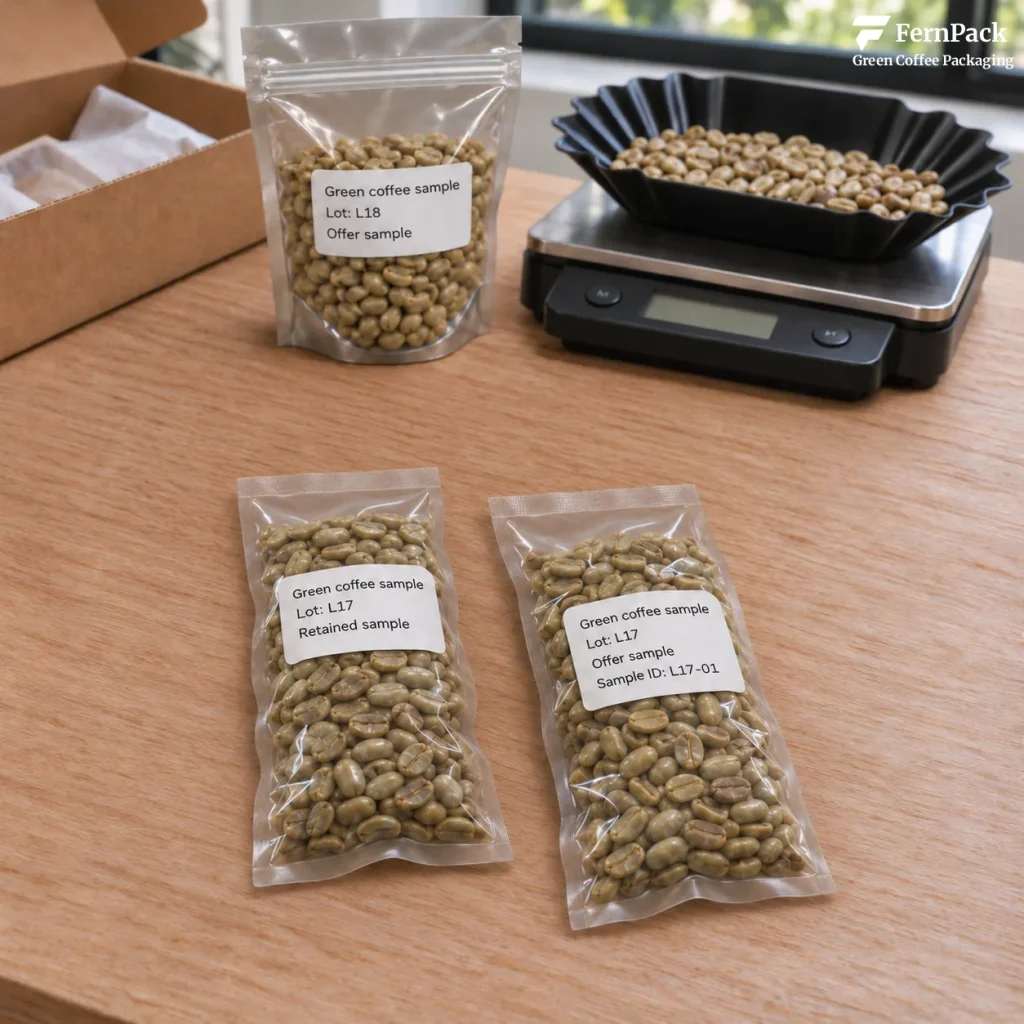
Put enough information on every sample bag for it to remain identifiable after separation from the shipping carton and email. Include a unique sample ID, the lot ID, sample stage, origin, processing method, sampling date, net sample weight, and sender. Add the buyer’s contract reference for a PSS. Keep the distinction between the weight inside the sample bag and the quantity of coffee represented unmistakable.
For example, an internal code such as COOP-L17-PSS-02 could identify a second pre-shipment submission for lot L17. The format itself is your choice; the useful feature is that the code links to a specific preparation event and cannot be confused with the first submission. Mark the earlier record as superseded when appropriate, while retaining its results and correspondence. Otherwise, an approval referring only to “L17” may leave uncertainty about which sample the buyer evaluated.
Use a separate lot sheet for information that would crowd the label: producer or cooperative, harvest period, variety where verified, processing details, milling status, available quantity, storage history, and planned export packaging. Add physical test results with their dates and methods. If you report a defect count, identify the test portion and grading system; if you include a cup score, state the assessment framework and evaluation date. A number without its measurement context is difficult to compare.
Keep verified facts distinct from estimates and observations. An estimated export quantity should be identified as provisional, and your own tasting notes should be presented as your assessment rather than a promised outcome in the buyer’s laboratory. Avoid filling missing fields with assumptions about variety, certification, or processing. A clearly marked unknown is easier to resolve than contradictory information discovered after an order is placed.
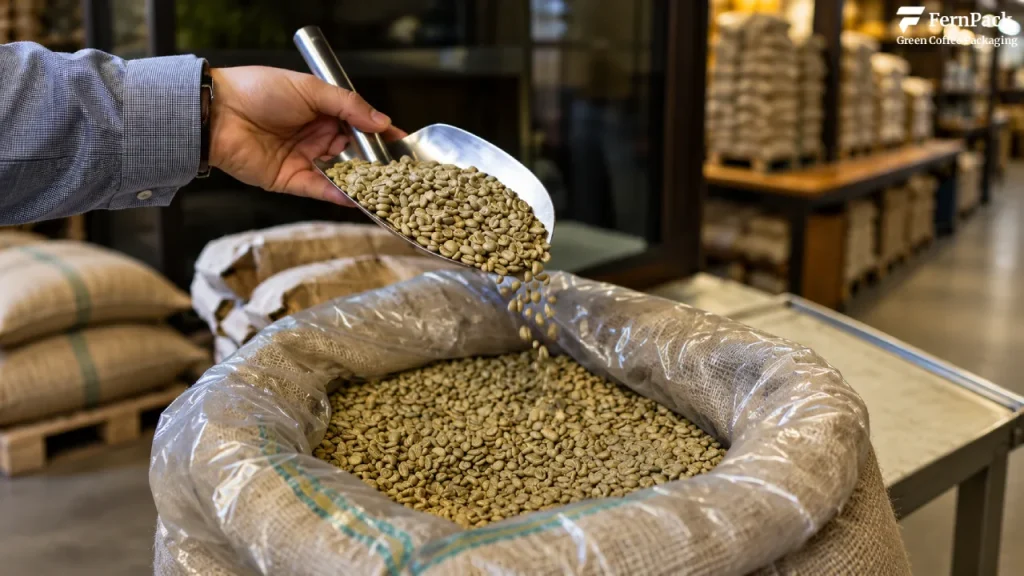
Package green coffee samples to preserve their condition
Packaging should limit changes between sampling and evaluation while preventing contamination and physical loss. Select clean, odor-free packaging suitable for direct food contact, with a moisture barrier and a closure appropriate to the intended tests and journey. Samples intended for moisture-sensitive measurements need particular care because exposure to the surrounding atmosphere can change the condition being measured. Confirm any laboratory-specific packaging instructions before filling.
For a flexible sample pouch, check the usable capacity with the actual green coffee. There must be enough space to fill cleanly and create the specified closure without trapping beans or dust in the sealing area. If the pouch is heat sealed, use settings appropriate to its material and your equipment, then inspect for wrinkles, contamination, gaps, and damaged corners. A neat printed bag offers little protection if the seal is incomplete.
Treat a zipper and a heat seal according to their actual functions in the chosen pouch design. A zipper may make repeated opening convenient, but its presence alone does not demonstrate that the filled package meets your transit protection requirements. Ask the packaging supplier how the pouch should be closed for dispatch and test that method with filled samples. During a packing trial, check whether handling causes the closure to open, the film to abrade, or the label to detach.
Vacuum packing can be considered when the bag, equipment, and buyer’s requirements support it, but vacuum is not a prerequisite for every green coffee sample. A hermetic package does not necessarily require evacuation, and neither approach corrects unrepresentative sampling. Record the packaging method, especially if the sample will travel in a different format from the commercial lot. Sample evaluation describes the received sample; it cannot by itself prove how the full shipment will perform under different storage and transit conditions.
Place the sealed pouches in a clean, protective outer carton with enough cushioning to prevent excessive movement. Keep them away from strong-smelling goods and materials that could puncture the film, and place paperwork outside the coffee’s primary package. Before closing the carton, compare every bag ID with the packing list and photograph the labels and packed arrangement. This creates a useful dispatch record if a pouch arrives damaged or a sample appears to be missing.
Organize shipping around the evaluation date
Work backward from the buyer’s planned assessment and any shipment approval deadline. Allow time for courier transit, clearance, sample roasting, evaluation, and a possible replacement submission. Confirm that the named recipient can accept the parcel during the expected delivery window. Sending a time-sensitive PSS without checking laboratory availability can leave the export schedule dependent on a box waiting unopened.
For international dispatch, confirm destination requirements with the buyer and the carrier or customs broker before booking. Ask specifically about documents or permissions applicable to green coffee from your origin, including any plant-health or food-import requirements. A small quantity or a statement that the coffee is for evaluation does not, by itself, establish an exemption. Requirements depend on the route and destination, so use instructions for that shipment rather than a previous customer’s paperwork.
Prepare an accurate goods description and keep the invoice, shipment details, and packing list consistent. Describe the contents as green, unroasted coffee beans for evaluation, with the appropriate origin, quantities, weights, and customs value confirmed for the shipment. FedEx specifically warns that descriptions consisting only of terms such as “samples” or “not for resale” are insufficient. Clarify who will handle clearance questions and charges so the parcel is not held while responsibility is disputed.
Send the buyer the tracking details, sample IDs, lot sheets, and expected arrival date when the carton leaves. Ask for confirmation of receipt and package condition before discussing evaluation results. If the courier reports a delay or damage, keep that event in the sample record and discuss whether the affected portion remains suitable for the intended test. A replacement should receive its own dispatch record so the two evaluations cannot be confused.
Keep retained samples that support a meaningful comparison
Prepare retained portions at the same time as the buyer’s samples, from the same mixed composite. Seal and identify them promptly, including the sample ID, preparation date, and relationship to the dispatched portion. If you expect both routine internal evaluation and a possible later investigation, keeping separate sealed portions avoids repeatedly opening the only reference. Record who takes a portion and when it is opened.
Store references in a clean, dry location protected from heat, direct sunlight, and strong odors, using packaging appropriate to the intended comparison. Agree a retention period that covers the commercial process and any applicable contract requirements. For a PSS, discarding the reference immediately after approval may leave nothing to examine when the coffee arrives. Keep an inventory showing which references remain available and their storage history.
A retained sample provides evidence of the material prepared at a particular time, but it has its own storage history and cannot reproduce the buyer’s entire shipping experience. If the received sample tastes different, compare package condition, transit events, and assessment methods alongside the retained portion. A newly drawn warehouse sample answers a further question about the lot’s current condition. Label it as a new sampling event rather than replacing the original reference under the same ID.
Turn feedback into a recorded next step
Agree when feedback is expected and connect every response to the relevant sample ID. For an offer, useful feedback should explain whether the coffee fits the buyer’s intended use and whether the next step is a purchase discussion, a different lot, or no further action. For a PSS, the required outcome is a clear decision under the contract’s approval procedure. Separate a buyer’s general interest from the authorization needed to proceed.
A useful feedback record might state that sample COOP-L17-OFFER-01 suits the buyer’s intended blend, but that a purchase decision depends on confirming the available quantity and delivery window. For a PSS, the record should identify the exact sample and contract and state whether it is approved, rejected with reasons, or awaiting further evaluation. If the buyer requests a repeat assessment, record what remains unresolved and when a decision is expected. This gives the sales and export teams a clear basis for the next action.
When a result is disappointing, ask for observations that can guide an investigation. These may include the character and frequency of an unwanted flavor, physical grading findings, or differences across cups. Establish enough context about roasting and evaluation to make a comparison meaningful, then check your corresponding retained portion. Avoid assigning the cause to processing, packaging, or the buyer’s method before the evidence supports that explanation.
Suppose the buyer reports an unfamiliar odor and a pouch with a damaged corner. First verify the sample identity, request photographs, and review the packing and transit records; then compare an unopened retained portion under documented conditions. If the reference seems normal, that result justifies further investigation of the received sample and its journey, but does not establish the cause by itself. Agree whether to resend a retained portion or draw a fresh sample, depending on the question that needs answering.
Record the agreed action, responsible person, and expected date, including any consequences for the shipping schedule. If the lot needs further sorting or other preparation, document the change and arrange the required re-evaluation. Keep the final decision with the sample records so warehouse staff, sales staff, and the export team work from the same approval status. This prevents an informal conversation from becoming an unsupported instruction to ship.
Make sample preparation a repeatable part of selling coffee
A repeatable routine makes it easier for buyers to understand your coffee and for your team to respond when questions arise. Before dispatch, one final check should connect the requested evaluation, the sampled lot, the bag labels, the supporting records, and the retained portions. After dispatch, the same record should show receipt, feedback, and the next agreed decision.
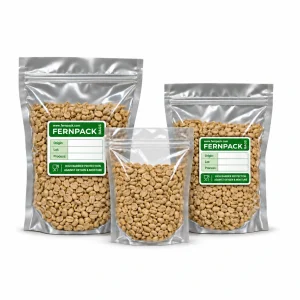
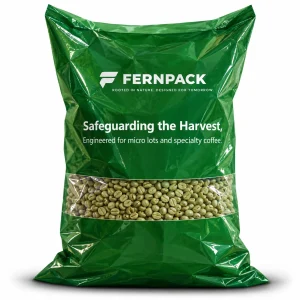
For the packaging part of that routine, FernPack offers green coffee sample packaging within its broader green coffee packaging range. When discussing a suitable pouch, provide the sample weight, filling and sealing method, destination, expected handling conditions, and label requirements. Ask for the relevant material and food-contact information, then trial the package with your actual coffee before adopting it across your sampling programme.